Table Of Content

That’s when his focus shifted toward creating the multi-media platform for designers that he envisions now – one that would help educate users and serve as a resource for anyone seeking information about AI in landscape architecture. Leonardo.Ai helps architects to reduce time-consuming tasks by allowing for rapid prototyping and on-the-fly image generation. Our versatile tools empower users to test concepts, quickly iterate on their designs and visualise projects efficiently and creatively.
Realtime Canvas
Probably the most widespread use of AI by practices is for visualisations for design ideations. Any licensed Photoshop user can now use its Generative Fill system, which is powered by Adobe’s Firefly AI engine, for instance. This week, RIBA has published the findings from the first ever industry-wide survey of how architects are responding to Artificial Intelligence (AI) in the architectural profession. The results suggest that AI will be widely adopted and integrated into practice and is expected to deliver tangible benefits for the profession in the near term. As we continue our journey through the world of AI in architecture, we'll further uncover the limitless possibilities and opportunities that this transformative technology offers.
Best AI Tool for Data-driven Plans
“I’m all about gardens connecting the architecture into the landscape,” landscape architect Timothy John Palcic tells AD PRO. He used a limited palette of chartreuse and dark hues that nod to the brick exterior and arranged benches to create intimate seating areas within the larger English-garden-inspired space. “I thought, if somebody’s taking care of the baby, they have a space where they can come and feel like it’s a retreat,” Sabatella says.
Fala Atelier transforms Porto warehouse into "house of many faces"
How AI and Real-Time Rendering Are Shaping Architectural Practice - ARCHITECT Magazine
How AI and Real-Time Rendering Are Shaping Architectural Practice.
Posted: Fri, 29 Mar 2024 16:42:54 GMT [source]
Performing as a cloud platform, Hyper allows architects to efficiently collaborate with other construction industry professionals and accelerate both the design and construction process. The software includes a library with preset building systems such as plumbing, mechanical and electrical schematics as well as structural charts that can be integrated in a project. Being a web-based accessible tool, Hypar allows architects, engineers and contractors to easily integrate their respective designs and building systems through real-time rendering and produce highly coordinated plans that are ready for construction. Even though there have been countless debates on whether AI technology will diminish the architectural profession, the way architects currently use such tools suggests otherwise. They acknowledge and utilize AI’s immense real-time analysis and strategic thinking capabilities, while being aware of its limitation for true, original innovation.
Can AI Make Architects Better Storytellers? - ArchDaily
Can AI Make Architects Better Storytellers?.
Posted: Thu, 02 Nov 2023 07:00:00 GMT [source]
Indian designer and Midjourney user Manas Bhatia, who creates conceptual art showing futuristic cityscapes that depict complex integrations of structures and nature, agreed. Like architectural sketches, AI imagery is often colourful and dreamlike, but not necessarily actionable as a detailed plan, he explained. When used thoughtfully, sweeping expanses of glass and silicon can add construction detail and architectural rhythm. The true genius of Luma.AI occurs in renovation and restoration projects, where it can capture existing structures with striking accuracy and creates virtual twins. It bridges the gap between the tangible and the virtual, allowing architects to visualize the renovated structure even before the first brick is laid.
Generate optimal building designs in real time
Operating on a cloud-based platform, Autodesk Forma is easily accessible from any location and works in tandem with AutoCAD and Revit. Sidewalk Labs is absolutely the new kid on the block, but the program has great potential in the race to rethink our urban landscapes.
An eye-catching natural stone by Walker Zanger was selected for the counters and backsplash, and the space was outfitted with the latest Monogram appliances. A brick-walled patio became a party-ready outdoor kitchen and dining area thanks to Douglas R. Santicola of Outdoor Elegance. Santicola and Monique Wood installed Caesarstone countertops fabricated by Carlito’s Way Stone to create a functional space for outdoor entertaining. Designer Ashleigh Miranda focused on juxtaposing technology and earthy elements in her moody media room. “I really wanted to showcase state-of-the-art technology but in a way that was grounded and spoke to our primitive nature.” Cutting-edge tech from Bang & Olufsen, Lutron, and JoshAI is balanced by curvaceous seating and unique art. Designer Karen Billman made Dunn-Edwards’s Skipping Stones the star of her cheery sunroom.

In this context, architecture often spans various stages, from early phases where data decisively shapes built environments to later ones where generative design tools for spaces play a fundamental role in spatial configuration. In this process, visualization plays the crucial role of graphically understanding the expression of what is being designed. Thus, iterating on the visualization and evaluating each of the results is vital not only to express ideas but also to use those visualizations to interpret aesthetic elements.
In the past year, numerous technology companies have released software that uses AI systems called neural networks to convert users' text inputs into AI-generated images. Combining style and sustainability, these innovative interior spaces are actively contributing to a brighter future. It is important to note that CONIX.AI was developed for the Saudi market and includes tools specific for the Saudi Building Codes. Nevertheless, it allows architects to input their own, custom requirements, offering better control over their designs. Autodesk Forma carves a niche for itself as an all-encompassing AI-powered planning tool that offers architects and urban planners the ability to design sustainable, livable cities with heightened precision.
To create a future for design, we must look to the challenges and opportunities of today. The data-enabled design office is no universal panacea for the ills afflicting architectural practice. Yet it might be a conduit for a richer and more vital way of practicing design—one attuned to our age and embracing the opportunities ahead. Beyond its popular and social relevance, interweaving data more deeply with design practice offers creative possibilities to address the ever expanding visual data that is an essential product of our collective society. If one scrolled through Google Images endlessly—16 hours a day, for 80 years—one would have seen about 25 billion images, a miniscule proportion of the estimated 750 billion images on the internet, or the 1.72 trillion photographs taken every year.
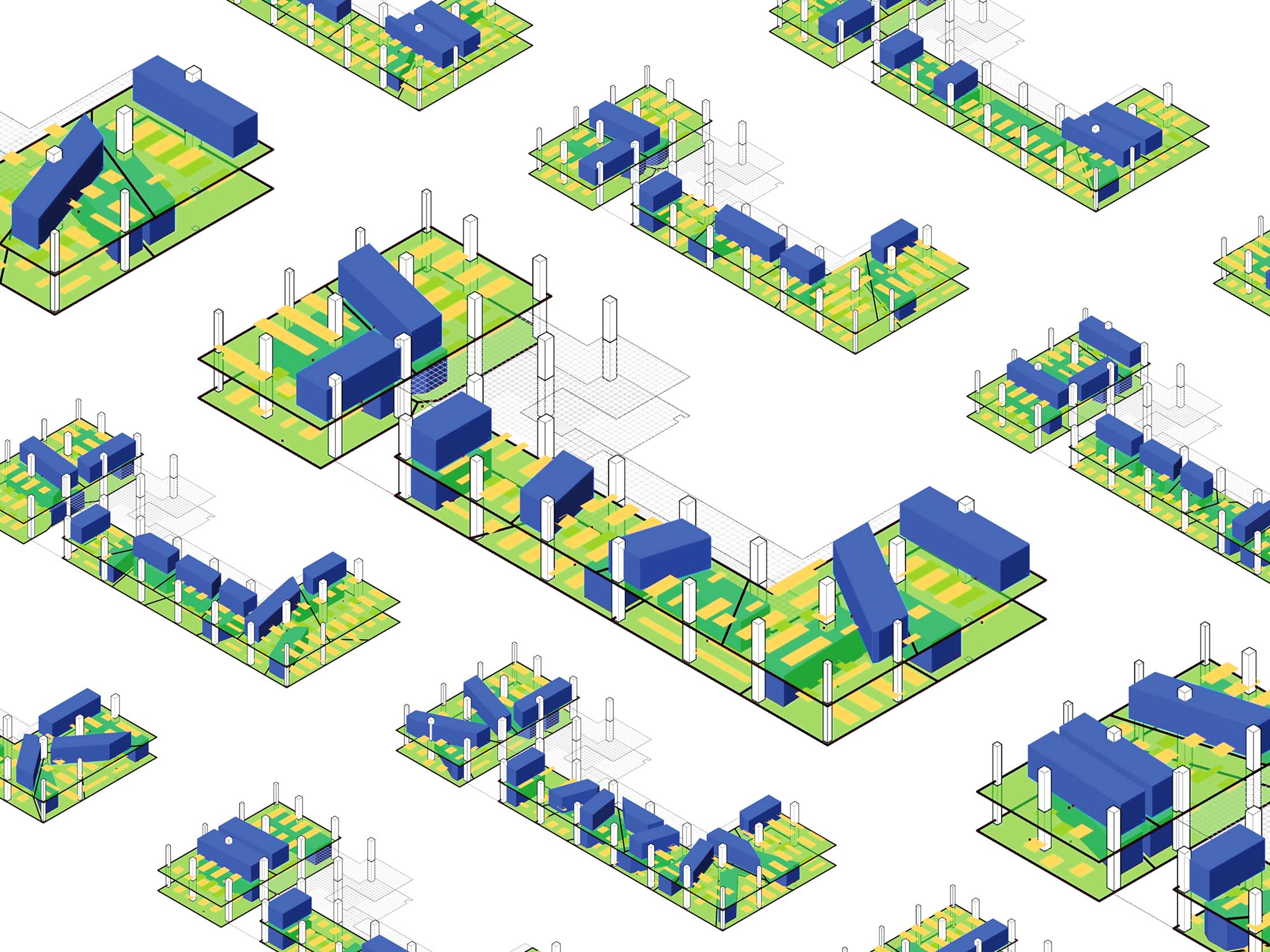
Image diffusion apps like Midjourney and Stable Diffusion can produce stunning concept design images from text prompts alone. However, Des regards the most interesting tool at the moment as D5 Render, which already integrates with CAD/BIM modelling systems such as Rhino, Revit, SketchUp and Archicad. The RIBA AI Report 2024 also includes a series of expert articles and case studies looking at how AI is reshaping practice, from computational design and digital fabrication to urban planning and environmental sustainability.
We are a band of misfits full of talent and knowledge, and our fast-paced, customer-focused environment inspires us to create and achieve the client's goal. Kurani says that VR allows him to detect subtle design problems that he might not have noticed on a screen. Walking around a classroom in VR with an audiovisual engineer, for example, lets them figure out the best placements for cameras so that remote teachers can clearly see their students and vice versa. Being in VR also allows Kurani to see if an exit sign might block the view of a student sitting in a back row who is trying to see a presentation on a high projector screen. Unlock the power of generating design variations from a single sketch, providing you with unparalleled flexibility.
Simply import your model into ArchiVinci to transform it into detailed and realistic renders. Hasidic Orthodox Jewish developers allege the town of Forestburgh, New York, altered zoning regulations to dissuade them from building homes on a site that had received previous approval under different ownership; state officials appear to agree. Gaudet reports that Arlington will spend an estimated $1 million over the next two years for the technology, which will come from bond funds allocated for signal improvements. Several Texas cities are using an AI-powered platform called NoTraffic to help manage traffic signals to increase safety and improve traffic flow. Cynthia Silverman created a nursery fit for a prince or princess, incorporating golden accents and whimsical touches, such as the hot-air balloon light and animal figurines. Jerome Thiebault created a polished and petite bathroom complete with storage and a shower.
ArkoAI enters the architectural scene as a promising AI-powered rendering service by providing high-quality, photorealistic renders in minutes. Through the power of AI and the convenience of a cloud-based platform, Arko.ai transforms 3D models into stunning visual masterpieces that mirror reality. Architizer’s Tech Directory is a database of tech tools for architects — from the latest generative design and AI to rendering and visualization, 3D modeling, project management and many more. Designing 3D architectural models traditionally required significant time and expertise. However, the AI Architecture Generator in Fotor simplifies this process by offering easy-to-use tools for creating 3D models. Describe your vision in words, specifying the desired style, layout, materials, and other details, and the AI Architecture building designer will interpret and transform those descriptions into stunning visual representations.
AI-assisted floor-plate generation is a species of parametric design, which is long-established in architecture to generate endless formal variations. As we've seen through these real-world examples, AI is not a mere tool but a catalyst for innovation in architectural design. It empowers architects to think beyond traditional boundaries and create structures that are sustainable, inclusive, and visually striking. As AI continues to evolve, it promises an exciting future where architecture becomes a harmonious blend of human creativity and artificial intelligence.
Architects follow the process of uploading a simple “shell” of their building, showcasing the overall usable space in each floor. In essence, even in its earliest stages, Autodesk Forma is a comprehensive architecture AI tool that supports architects in designing more thoughtful and sustainable cities. It facilitates informed design choices, promotes time and cost efficiency, and encourages the creation of sustainable designs, thereby redefining the landscape of urban planning and architecture.




No comments:
Post a Comment