Table Of Content

Worldwide Real Estate Developers and Architects are now boosting their design process thanks to the Smart GenAI Design Platform of ARCHITEChTURES. Join the best, it is already used by all sizes of businesses, from freelancers to leading companies. You can design as many variations of the project as you want, and when you have your ideal project, download the BIM model, and IFC standard, to continue developing your project by adding furniture, MEPS, and construction details. We can integrate our customer's feasibility analysis model, so project profitability can be evaluated in real time for any design decision. We train the Platform to fit your needs so that you can design all your projects in record time and we help you configure it with Parameter Presets so that you can be even more efficient in your designs and take full advantage of Generative AI.
Best AI Tools for Rendering
What, then, would a data- and media-fluent design practice that could respond to these evolutions look like? First, it would be multidisciplinary to its core, drawing people with versatile design, technical, and humanistic backgrounds capable of negotiating our world’s multidimensional design problems. Thanks to this broad disciplinary background, it could omnivorously imagine projects across scales and industries, engaging the relevant issues at a deeply strategic level.
Image Generation
12 inspiring AI designers you should follow on Instagram - Parametric Architecture
12 inspiring AI designers you should follow on Instagram.
Posted: Thu, 29 Jun 2023 07:00:00 GMT [source]
With Maket.ai, the challenge of client-specific requirements and spatial restrictions becomes an opportunity for diverse design exploration. Rather than presenting a singular vision — or whatever number timescale allows — architects can now offer a visual banquet of design alternatives, each as meticulously tailored as a Savile Row suit. As a relatively new program, many of the promised features of Firefly are not available yet. It wouldn’t be too far-fetched to conceive that the brains behind the interface didn’t want to fall too far behind the incredibly popular Midjourney and so decided to drip-feed users functions before the program was complete. While Midjourney is yet to fill the shoes of your favorite visualizer, the intelligent program can help designers convey complex designs by producing stunning visual narratives to help demonstrate to clients and stakeholders our vision.
Best AI Tool for Creating Office Plans
"We're talking about developing cultural models that can capture as much cultural data as any given country would be willing to give," he said, adding that Stability AI is having discussions about creating culture-specific neural networks. American designer Dan Harden of industrial design company Whipsaw said that AI is "gradually" entering industrial design but is "still primitive". Though the AI systems register the text typed in order to generate images, they do not understand language as humans do, often focusing on secondary nouns and adjectives or misunderstanding context.
Best AI Tool for Generating Design Alternatives
Currently, Firefly, like Midjourney, is a dynamic companion that can illustrate innovative design ideas using text-to-image prompts. Firefly is a trusty liaison, promoting collaborative relationships with colleagues and clients through a recognized and dependable platform. Effortlessly add vibrant, realistic colors to your masterplans with ArchiVinci's AI-powered coloring feature, enhancing your creativity in all ways.

Yet ironically, one could argue that data science is the generalist discipline of our time, in demand and applicable in virtually every field and a veritable necessity to understand the complexities of contemporary life. By connecting spatial imagination, creative drive, and a technically synthetic approach, a young office could prototype a new kind of creative generalist. Data is essential not only to inform how we deal with urgent societal and planetary challenges as a discipline, but today it is also fundamental to contemporary cultural life. In fact, by some measures, data has long surpassed architecture as a subject of popular fascination. Consider, for instance, how frequently “architecture” or “data” are mentioned in the popular press and published conversation. In the 19th century, during the initial professionalization of architecture, “architecture” and “data” appear with comparable frequency in published sources.
Upscale Your Architectural Design Process With AI Rendering Tools
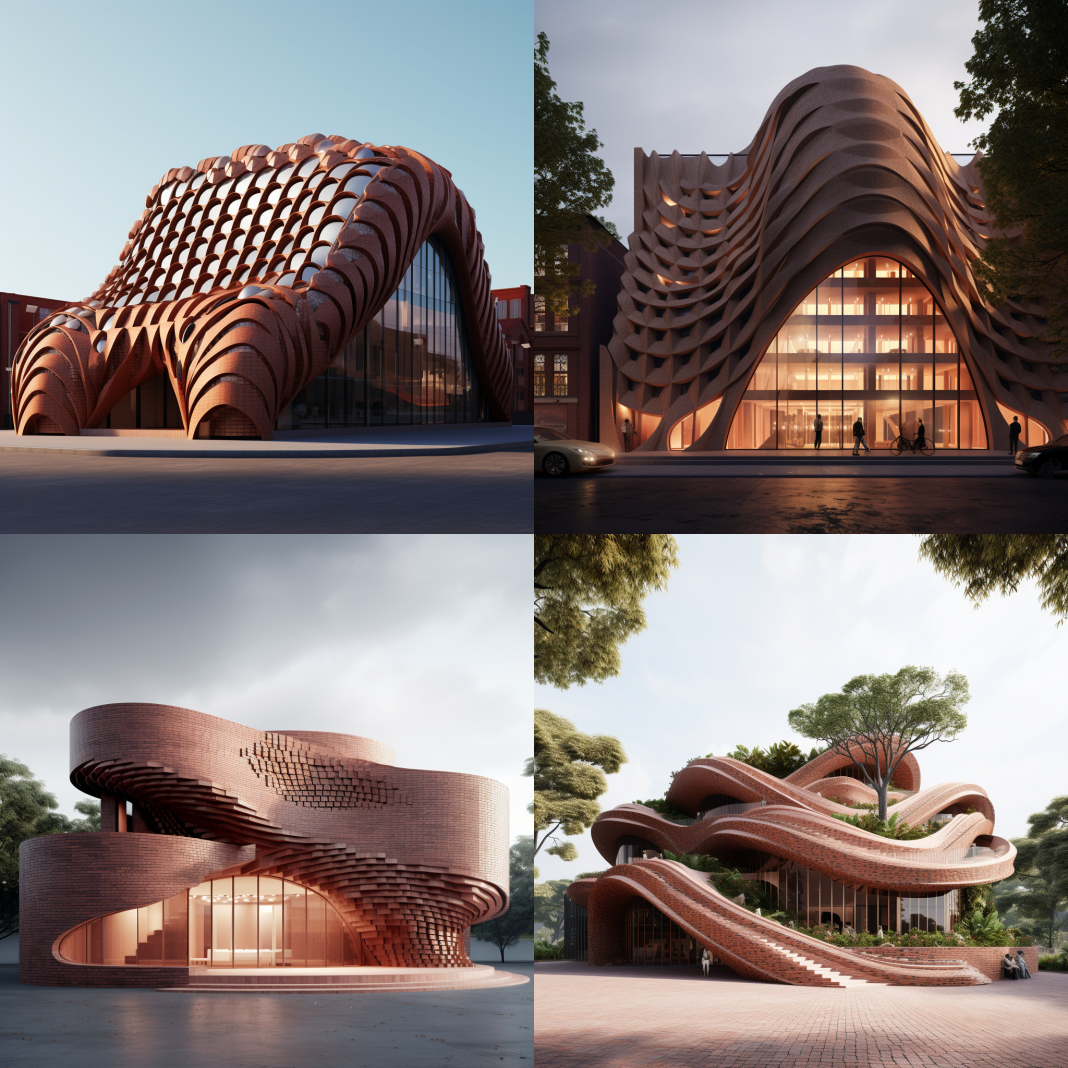
These tools make technical, programming-heavy tasks more accessible to non-coders such as designers or developers. From research projects to commercial products, the following examples show how AI in architecture can create opportunities to improve the design process so human creativity can take center stage. Artificial Intelligence (AI) in architecture is becoming a pervasive, powerful tool—it’s also a technology that finds itself at an awkward, intermediate stage of development. AI can solve simple, practical problems, like how to arrange a floor plan, with unmatched speed and variation.
Prompting Creativity: The Role of AI in Visualization and Design Tools for Architects
AI can significantly enhance the architectural design process, offering innovative solutions from conceptualisation to final visualisation. Leonardo’s AI architecture tools assist by generating detailed design mockups, refining presentation imagery, and exploring new visual ideas. And while AI’s potential to free architects from detail drudgery is real, the temptation for employers to use this labor-saving tool to increase the pace of production is also well-established.
The platform shows in real time the resulting BIM solution and all its metrics to be later downloaded in XLSX, DXF, and IFC formats. Used by architects and real estate developers to optimize the feasibility analysis process with regulatory confidence, rapid iterations, and accurate instant insights. Then, to download the standardized initial BIM model of the site to continue with their traditional workflow. The recent Building Regulations, with its emphasis on competence, has only reinforced this.
AI in architectural design is most useful for rapidly completing mundane, repetitive tasks and for optimizing designs by small increments, often referred to as artificial narrow intelligence. AI can instantly fill a residential tower with apartments shaped to fit the developers’ specifications and can tune them to varying degrees of material and cost efficiency. Additionally, image generators can work as an unapparelled “mood board” for design inspiration, offering a quick visual synthesis drawn from vast image libraries. These detailed images can give architects an aesthetic target to aim for as they define structural and engineering systems.
The program enables architects to identify and rectify errors, enhancing the quality of the final output and minimizing post-construction issues. The provision for real-time visualization empowers architects to make informed design decisions, visualizing the impact of each modification. In the client-facing phase, Kaedim plays a critical role in visual communication, enabling architects to present 3D models that resonate with clients’ imaginations. It also carries its weight during the construction planning phase, ensuring accurate documentation via detailed 3D models.




No comments:
Post a Comment